






Explore recommended attractions for cruise visitors to Pohang.
-
Yeongil Bay Special Tourist Zone
-
Eco-Environment Course
-
Homigot Peninsula Course
Discover the attractions that best represent Pohang.
 Jukdo MarketLink to page
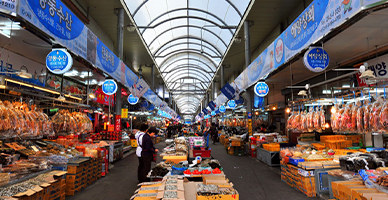
True to its reputation as the largest fish market on the East Coast, Jukdo Market offers a wide variety of seafood at affordable prices. You can enjoy Pohang Mulhoe (raw fish soup) packed with seasonal seafood, as well as snow crabs, rock octopus, and Gwamegi depending on the season. With over 200 sashimi restaurants clustered within the market, including the Fisheries Cooperative Market, you can enjoy fresh raw fish regardless of the season. It is a large traditional market overflowing with diverse food options, ranging from fresh seafood to dried seafood and agricultural products. Depending on the section, the market is divided into specialized alleys such as the Sashimi Center Alley, Gwamegi Alley, Dried Seafood Alley, and Agricultural Products Alley, as well as Geurotgolmot, Ibulgolmot, and Hanbok Alley, allowing you to choose and explore according to your preferences.
- From Pohang Yeongilman Port
- 18km, 30 min
 Guryongpo Japanese House StreetLink to page
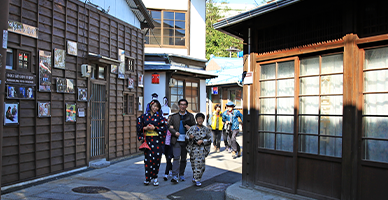
A place of lesson for future generations preserving and remembering the painful history of the past This street retains Japanese houses where Japanese people lived over 100 years ago, giving you the feeling of being in an old-fashioned alleyway in Kyoto, Japan. From Guryongpo Japanese House Street, climb the hill overlooking Guryongpo Port to take in the view, and follow the path behind it to visit the Guryongpo Gwamegi Culture Center.
- From Pohang Yeongilman Port
- 50km, 50 min
 Janggi Eupseong Fortress & Exile Culture Experience VillageLink to page
Janggi Eupseong is a town fortress that also serves the function of a mountain fortress. It was constructed on a flat surface at the summit (100m above sea level) of a ridge extending eastward toward the coast from Mt. Dongak (252m above sea level). Its shape is a rhombus that is slightly elongated from east to west. The overall shape of the fortress resembles a horseshoe shaped like a lotus leaf, and it was built to allow a panoramic view of the East Sea. The Janggi-myeon area of Pohang City is famous as the place where over 100 scholars of the Joseon Dynasty were exiled, and it is the land where distinguished scholars and prominent figures such as Uam Song Si-yeol and Dasan Jeong Yak-yong shed tears of regret. The Exile Culture Experience Village was established based on the background of how these exiles, despite their hardships, explored books, wrote poetry and prose, and educated local scholars, giving birth to a unique culture of exile.
- From Pohang Yeongilman Port
- 47km, 50 min
 Pohang Railroad Forest & Garden of FireLink to page
An urban forest where a railway track that ran through Pohang for about 100 years has been reborn as a citizen-friendly space The 4.3km section between Hyojja Station in Nam-gu and the old Pohang Station, where trains ran for approximately 100 years, became a disused railway following the relocation of the KTX Pohang Station in 2015. The railway tracks now cut through residential areas to create an urban forest. Future-oriented urban regeneration and the creation of a green ecological city, featuring water features such as wall fountains, musical fountains, and steel art installations, captivate the attention of tourists. During the construction of the Pohang Railway Forest, a spark ignited natural gas found 200 meters underground while drilling a well, leading to the current state of the area. Although it was expected to die out quickly, the flames persisted for a long time, so let's also explore the Garden of Fire, which was created to provide a unique spectacle.
- From Pohang Yeongilman Port
- 21km, 25 min
 Gyeongsangbuk-do Arboretum: Four SeasonsLink to page
A family outing and a date course for couples, filled with romance at every step It is the highest altitude arboretum in Korea (650m above sea level) and the country's first arboretum of such scale (2,727ha). It is a place where nature experiential learning and conservation areas for academic research coexist. It is home to a diverse range of over 1,500 plant species.
- From Pohang Yeongilman Port
- 30km, 50 min
 Yeonorang Seonyeo Theme ParkLink to page
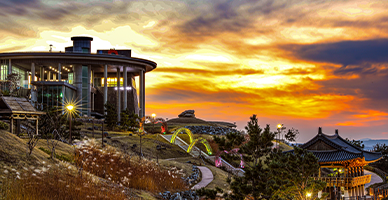
The story of ‘Yeonorang and Seonyeo,’ recorded in Volume 1 of the Samguk Yusa, is a representative folktale of the Pohang region and is considered an archetype of ancient sun mythology. (Based on the story that in the 4th year of the reign of King Adalla, the 8th king of Silla (157 AD), the sun and moon of Silla lost their light when the couple Yeono and Seonyeo, who lived on the East Sea coast, went to Japan, but regained their light after offering sacrifices with silk woven by Seonyeo sent from Japan), various park facilities are located along the Donghae-myeon coast, starting with the Yeonorang and Seonyeo Story Wall, followed by cultural facilities such as Gwigigo, Hanuk Garden and Bangji Pond, Ilwoldae (offering a view of Yeongil Bay), Turtle Rock (which looks as if Yeonorang and Seonyeo rode on it), Silla Village composed of thatched-roof houses, and art works in the Iron Art Garden. It is established.
- From Pohang Yeongilman Port
- 45km, 40 min
 Pohang CanalLink to page
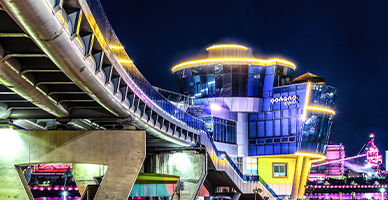
Pohang Cruises operate regularly along the canal waterway. Various types of greenery have formed, making it great for a stroll. The Pohang Canal presents an exotic waterway journey where you can enjoy the "romance of water" by taking a cruise ship along the charming waterways flowing through the city. It is a romantic trip that traverses the water. Course B, which takes a small loop, is 6km round trip and takes about 30 minutes, while Course A, which takes a large loop, is 8km and takes about 40 minutes. The operating route changes depending on the sea weather, but if the weather is good, you can go out to the open sea off Pohang. It is available from 10:00 AM until sunset.
- From Pohang Yeongilman Port
- 18km, 30 min
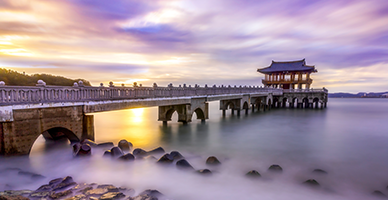 Yeongildae & POSCO Night ViewLink to page
Yeongildae Beach offers views of POSCO and Yeongil Bay. With its fine white sand and long beach, it is Pohang's representative beach. Home to Korea's first maritime pavilion, it has established itself as a new landmark of Pohang. Watching the sunrise over the East Sea from the Yeongildae Observatory, a two-story traditional pavilion built in the middle of the ocean, offers a uniquely moving experience. The night view of POSCO expresses cheerful energy and a dynamic appearance through LED lighting on the exterior of the steelworks. Additionally, accent paint has been applied to the blast furnaces and chimney structures to enhance the eco-friendly image. The night views from Songdo Beach, Yeongildae Beach, and Haedo Park each exude their own distinct charm.
- From Pohang Yeongilman Port
- 11km, 20 min
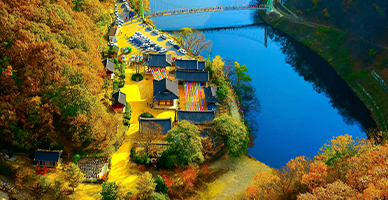 Oeosa Temple on Mt. UnjesanLink to page
A thousand-year-old temple dating back to the Silla Dynasty, situated at the foot of Mt. Unje south of downtown Pohang. Oeo Temple boasts scenery rarely seen at other mountain temples, with mountains on three sides and the Oeo Reservoir on one. Mt. Unje, standing at 480m above sea level, is famous for its spectacular autumn foliage, making it a popular destination for autumn hiking. There is a famous walking course, all 3 to 4 km long, and you can reach the Unjesan Observatory in about 2 hours one way.
- From Pohang Yeongilman Port
- 30km, 30 min
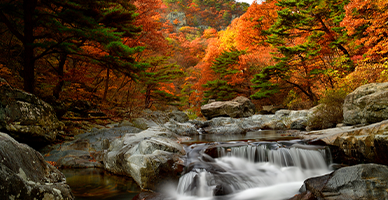 Twelve Waterfalls of Naeyeonsan MountainLink to page
The true taste of nature where 12 waterfalls and strange rock cliffs harmonize Naeyeonsan Mountain, spanning Songna-myeon, Cheongha-myeon, and Jukjang-myeon in Buk-gu, Pohang-si, and Namjeong-myeon in Yeongdeok-si, features a valley exceeding 20 ri that forms a magnificent natural landscape, harmonizing with 12 waterfalls, large and small pools and ponds, and strange rock cliffs such as Giwadae, Seonildae, and Hakso-dae. It is nestled warmly, embracing the clear stream flowing down from the valley famous for the Naeyeonsan 12 Waterfalls.
- From Pohang Yeongilman Port
- 29km, 45 min
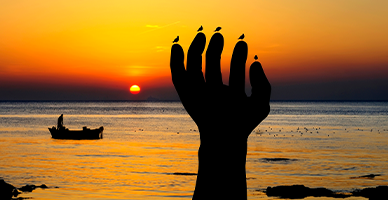 HomigotLink to page
Meaning "tiger's tail," Homigot is located at the easternmost point of the Korean Peninsula and is the place where the sun rises first, making it Korea's first famous sunrise spot. During the reign of King Myeongjong of Joseon in the 16th century, Gyeokam Nam Sag-go, a geomancer, described this place as corresponding to the tiger's tail in the country's topography and called it the best auspicious site in the world. Yukdang Choi Nam-seon described the Korean Peninsula as the shape of a Baekdu Mountain tiger clawing at the Primorsky Krai with its front paws, and listed this place, the best for sunrises, as one of the Ten Scenic Views of Joseon. Since 1908, it has been home to the Homigot Lighthouse, the largest in the country, and features an observation deck where visitors can view the entire coastline of the Homigot area at a glance.
- From Pohang Yeongilman Port
- 65 km, 55 min